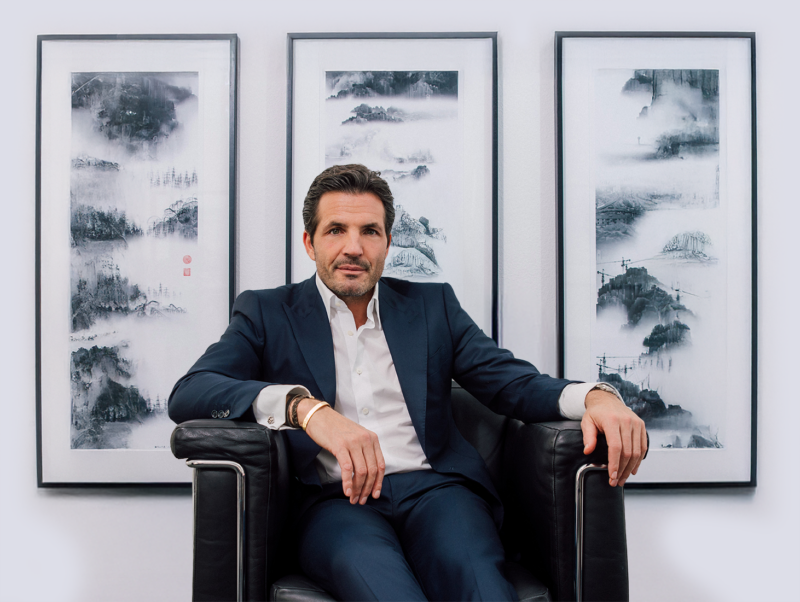
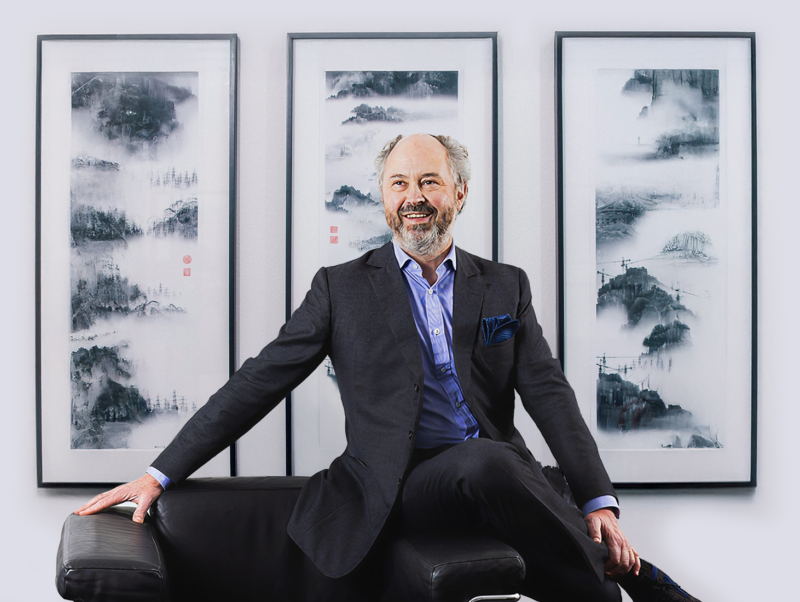
Conversation with Jean-Conrad Hottinger
Looking back, what led you to rethink your vision of wealth management and client relationships?
For a long time, wealth management remained relatively straightforward.
Even in substantial wealth situations, it was often easier to maintain a coherent overall perspective.
Today, certain situations have become far more complex. Family dynamics, entrepreneurial considerations, tax matters and international dimensions increasingly intersect, making it difficult for clients to maintain a clear view of the whole picture.
And this is not necessarily a question of sophistication. Even highly experienced clients can sometimes find it difficult to preserve that broader perspective.
Today, access to solutions is no longer the issue. Solutions, expertise and specialists are widely available.
The real challenge often lies elsewhere. It lies in maintaining coherence and enabling clients to truly carry their decisions.
What have you gradually sought to build at Hottinger Gaultier?
At a certain point, we began to realise that some situations could no longer be approached in the traditional way; that certain decisions could no longer simply be brought to the client from the outside.
A solution may be technically excellent and yet fail to produce something genuinely robust.
What we progressively sought to build at Hottinger Gaultier was a way of accompanying clients that would allow them to truly take part in the decisions they will ultimately have to carry.
This requires time, perspective and clarification.
Because these decisions rarely concern financial matters alone. They often involve family considerations, succession issues, entrepreneurial responsibilities and sometimes even a particular vision of the future.
And I believe that when clients are truly involved in that process, decisions tend to become more coherent and more sustainable over time.
In practical terms, how do you create the conditions that allow clients to become active participants in their own decisions?
I believe the starting point is accepting that certain decisions can almost never be viewed through a single lens.
In many situations, several important issues overlap and become difficult to assess separately.
Before discussing implementation, it is often necessary to clarify what is truly at stake for the client: what they are seeking to preserve, what they are trying to build, and sometimes the long-term consequences certain decisions may carry.
This requires stepping back, putting things into perspective and rebuilding, together with the client rather than on their behalf, a coherent overall picture.
Part of our role as a firm is also to reduce the noise, the distractions and sometimes the contradictions that can make decisions difficult.
Ultimately, what should clients be able to regain through this approach to wealth management?
The objective is not simply to help clients choose between different solutions, structures or recommendations.
It is to help them regain the ability to decide for themselves.
We have a line on our website that captures this approach rather well:
You come in with a complex wealth situation.
You leave with the ability to decide.
That is the real issue.
Because when decisions affect a family, a business, a succession or sometimes several generations, it becomes essential that clients are able to carry those decisions themselves.
After all, the wealth belongs to the client. It is therefore only natural that the capacity to decide should remain theirs.
And I believe that this capacity for action only acquires real meaning when it can be translated into implementation.
At Hottinger Gaultier, this continuity between decision-making and the ability to put decisions into practice is an integral part of our approach.